

What Does 'Label Standardization' Actually Mean?
Label standardization means creating a unified system for your labeling needs through consistent materials, sizes, formats, and ordering processes across your entire operation. Instead of different departments ordering different labels from different vendors at different times, you establish one streamlined program.
The Real Costs of Inconsistency
Before exploring the savings, it's worth understanding what label inconsistency actually costs. The damage shows up in several ways:
Excess Inventory & Waste
When every product line or location orders its own labels independently, you can end up overordering. GRLabel’s Vendor Managed Inventory (VMI) programs mean we can hold labels at our facility, then ship out as your demand requires.
Reorders at Premium Pricing
Small, one off orders almost always cost more per unit. Companies that haven't consolidated their label needs miss out on volume pricing that can reduce per label costs.
Operational Inefficiencies
Time spent sourcing labels from multiple vendors, managing different invoices, and troubleshooting compatibility issues is time that isn't going toward productive work.
Compliance Risk
In regulated industries like automotive, durable, and food & beverage, inconsistent labels can lead to compliance failures and recalls that diminish any label savings on the front end.
Brand Damage
Labels that vary in color, finish, or quality across product lines erode brand perception. Many customers will notice the inconsistency.
Where Standardization Can Delivers Savings
Volume Pricing and Consolidated Orders
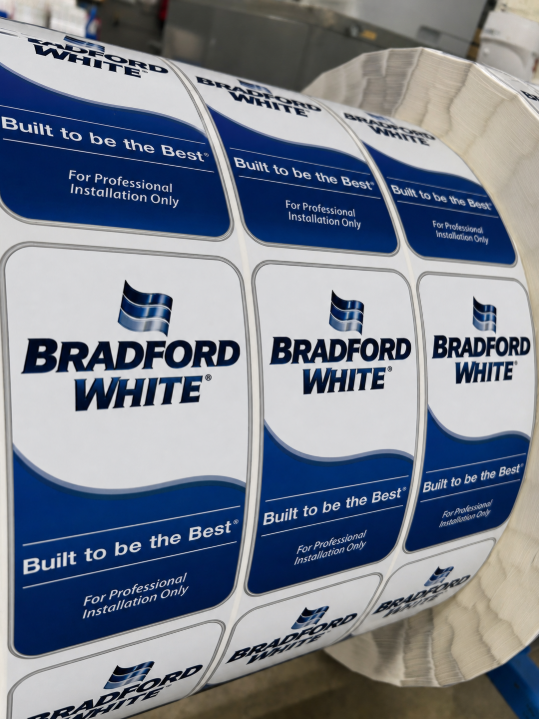
One of the fastest wins in label standardization is consolidating orders. Grand Rapids Label works with clients to audit their full label usage across departments or locations, identify overlap, and consolidate orders into larger, more cost efficient runs. For many businesses, this alone can reduce label costs, sometimes as much as 15–30%.
Reduced SKU Complexity
Many businesses are surprised to discover how many unique label SKUs they're managing. Standardizing materials, sizes, and adhesives across product lines reduces costs and simplifies procurement.
Fewer Errors and Reprints
Standardized templates and approved artwork managed through Grand Rapids Label’s art department mean fewer design errors, reprints, and less downtime on production lines waiting for corrected labels. In high volume environments, the cost of a single label error can be substantial.
Smarter Material Choices
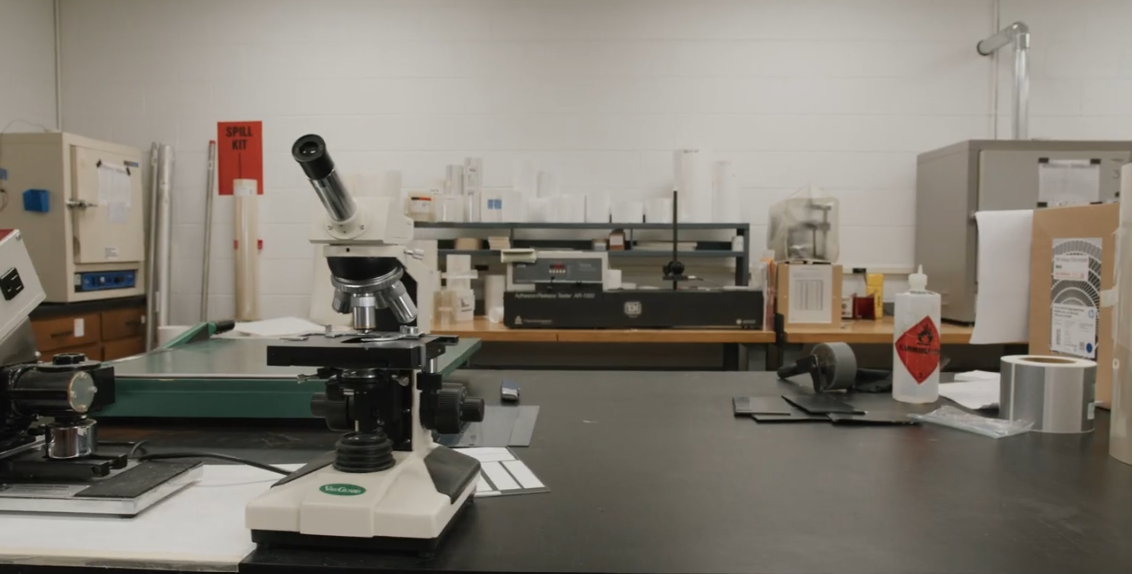
Grand Rapids Label brings deep material expertise that most teams simply don't have. With an onsite laboratory, our team can identify when you're over specifying materials (paying for premium substrates where standard ones would work fine) or under specifying (using labels that fail prematurely) leading to performance issues.
Getting Started: What the Standardization Process Looks Like
A label standardization initiative with Grand Rapids Label typically follows a straightforward process. A GRL senior sales engineers can assist with reducing the complexity of your current label types, quantities, vendors, and associated costs. This typically includes:
Consolidation Mapping
Determine which labels can be unified, which materials can be standardized, and where volume consolidation creates savings.
Program Design
Develop standard templates, approved materials, and a streamlined ordering process.
Implementation
Roll out the new program with full support from the Grand Rapids Label ranging from sales, customer service, quality, and executive support.
Ongoing Optimization
Review usage, adjust quantities, and continue finding efficiencies as your business grows.
Support from GRLabel Sales Engineers
Campbell Crosby, one of GRLabel's senior sales engineers, frequently works alongside his clients to discover where their current label spend may be lacking efficiencies:
"We focus on VAVE (Value Analysis / Value Engineering) to strengthen supply chain resiliency and drive down costs through label standardization. By consolidating materials, GRLabel can purchase raw materials in higher volumes from our suppliers, unlocking cost efficiencies that are passed directly on to our customers. Just as importantly, increased material usage allows us to consistently stock these materials at our facility, significantly reducing lead times and improving responsiveness when demand shifts."
The Bottom Line
Label standardization isn't a glamorous initiative. It doesn't make headlines or generate buzz. However, for businesses that take it seriously, it consistently delivers meaningful cost savings that can be allocated elsewhere in your operations.
With a partner like Grand Rapids Label, the path to a fully standardized, optimized label program is shorter than you might think.